Smartphone 2029: A Vision of the Next Generation of Mobile Technology
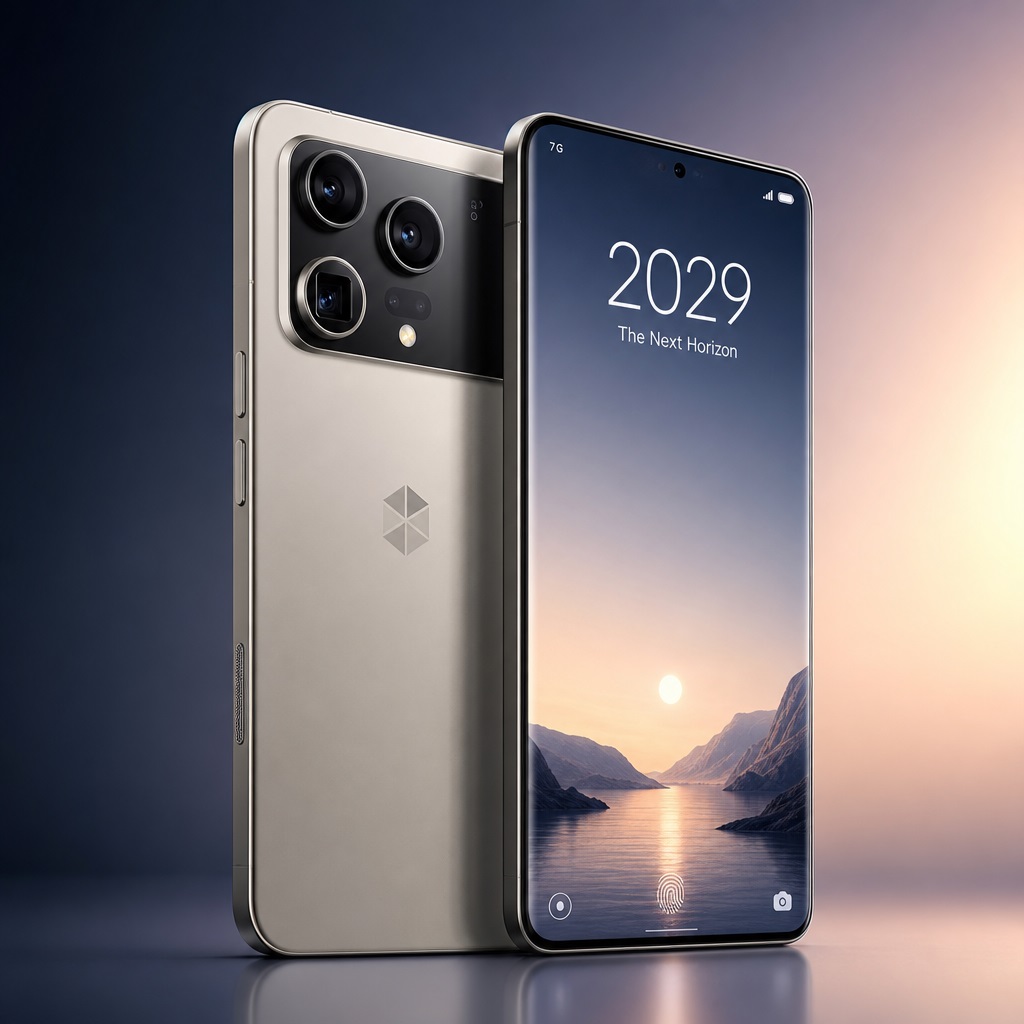
Concept illustration used for this article. The smartphone shown is a fictional design created to imagine what flagship mobile technology could look like in 2029.
The smartphone has become the centerpiece of our digital lives, evolving from a communication device into a powerful tool for work, creativity, entertainment, and health. As artificial intelligence, wireless connectivity, and semiconductor technology continue to advance, the smartphones of 2029 could offer capabilities that seem futuristic today.
The concept device featured above imagines a premium flagship smartphone designed for the end of the decade. With an edge-to-edge display, advanced camera system, and AI-first software experience, it represents the direction many mobile innovations may take in the coming years.
A Display Without Compromise
One of the most noticeable features of the concept is its nearly bezel-free display. By 2029, smartphone screens may completely eliminate notches and punch-hole cameras through advanced under-display imaging technology.
Future display improvements could include:
-
Ultra-bright MicroLED panels
-
Adaptive refresh rates up to 240Hz
-
Higher energy efficiency
-
Improved outdoor visibility
-
More durable, scratch-resistant glass
These advancements would provide a seamless viewing experience for gaming, streaming, and productivity.
Artificial Intelligence at the Core
Rather than simply responding to voice commands, future AI assistants may become proactive digital companions.
On-device AI could:
-
Organize schedules automatically
-
Translate conversations in real time
-
Edit photos and videos instantly
-
Summarize emails and documents
-
Predict user needs before they ask
By processing more information locally, smartphones could deliver faster performance while enhancing user privacy.
Professional-Grade Mobile Photography
Smartphone cameras continue to challenge traditional cameras, and by 2029 they may become even more capable.
The concept features a sophisticated multi-camera system that could include:
-
Large primary image sensors
-
Variable aperture lenses
-
Advanced periscope zoom
-
AI-powered image enhancement
-
Improved low-light photography
-
Cinematic 8K or higher video recording
Instead of focusing solely on increasing megapixels, manufacturers are likely to invest in smarter image processing powered by AI.
Faster Than Ever Connectivity
As global communication networks evolve beyond today's standards, future smartphones may support next-generation wireless technologies with dramatically lower latency and higher bandwidth.
Potential benefits include:
-
Near-instant cloud synchronization
-
Ultra-high-definition video streaming
-
Enhanced augmented reality experiences
-
Faster online gaming
-
Improved satellite communication for remote locations
These capabilities could make smartphones more reliable regardless of where users travel.
Battery Technology Takes a Leap
Battery innovation is expected to become one of the biggest priorities over the next several years.
Future flagship devices may feature:
-
Multi-day battery life
-
Ultra-fast charging in minutes
-
Longer battery lifespan
-
Smarter AI-based power management
-
More sustainable battery materials
Improved efficiency from processors and displays would further extend daily usage.
Security Built Into Every Layer
Privacy and security will remain essential as smartphones store increasing amounts of personal information.
Future devices may include:
-
Large-area ultrasonic fingerprint sensors
-
Advanced facial authentication
-
AI-powered threat detection
-
Hardware-based encryption
-
Secure local processing for sensitive data
These features could help protect users while keeping authentication quick and convenient.
Premium Design Meets Sustainability
Flagship smartphones of 2029 may combine luxury materials with environmentally responsible manufacturing.
Possible design trends include:
-
Titanium alloy frames
-
Recycled aluminum components
-
Ceramic finishes
-
More repairable internal designs
-
Reduced electronic waste
-
Sustainable packaging
Manufacturers are expected to balance premium aesthetics with greater environmental responsibility.
The Future Is Intelligent
The smartphone concept shown here is not a prediction of one specific product but an illustration of where mobile technology may be headed.
Artificial intelligence, powerful cameras, immersive displays, longer battery life, and stronger privacy protections are likely to define the next generation of smartphones. Rather than focusing solely on faster processors or higher specifications, future devices will increasingly emphasize intelligent software that adapts to each user's needs.
Conclusion
By 2029, smartphones could become more than communication devices—they may serve as personal AI assistants, professional cameras, secure digital wallets, health companions, and productivity hubs, all in one elegant device.
While the concept shown here is fictional, it captures many of the innovations that researchers and manufacturers are actively exploring today. The next generation of smartphones promises not only greater performance but also a smarter, more seamless relationship between people and technology.