A Parent Bird’s Relentless Commute: The Quiet Drama of Raising Hungry Chicks
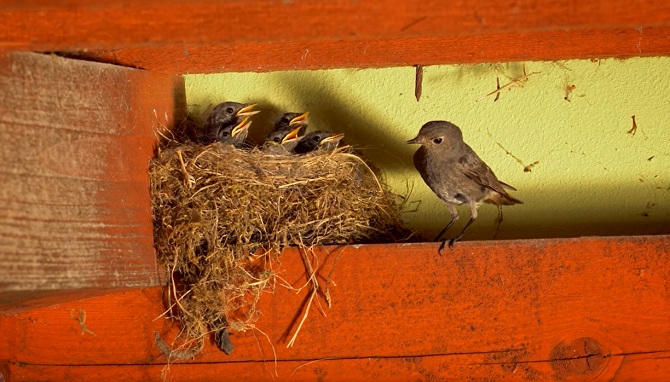
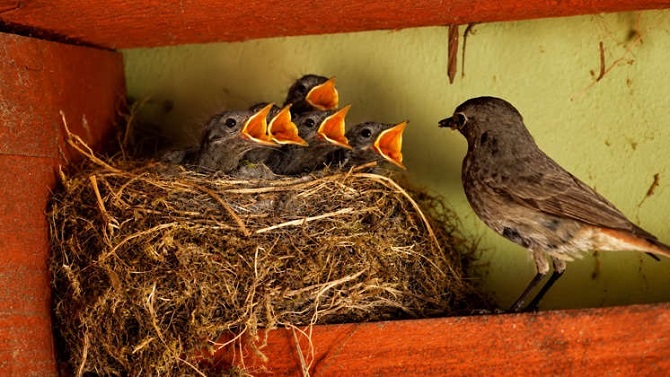
Every few minutes, a shadow flashes across the sky. A bird lands with remarkable precision on the edge of a carefully woven nest. Several tiny heads immediately rise, their mouths opening impossibly wide in anticipation. Within seconds, the parent distributes insects collected from nearby fields and trees before disappearing once again into the landscape. The exchange lasts only moments, yet it represents one of nature's most extraordinary investments: the relentless work of raising the next generation.
Wild birds have perfected the art of parenthood over millions of years. Although each species follows its own strategy, the image of a devoted adult returning to feed eager nestlings is nearly universal across much of the avian world. Whether the bird is a robin, swallow, blue tit, sparrow, or warbler, this familiar scene reflects an evolutionary commitment that demands remarkable endurance, precision, and instinct.
A Scene Repeated Thousands of Times Every Day
To a casual observer, feeding young birds may seem simple. The adult arrives with food, the chicks eat, and the parent flies away. Hidden beneath that routine, however, is an astonishing amount of work.
Many songbirds make hundreds of feeding trips every single day during the busiest weeks of the breeding season. From sunrise until dusk, parents patrol gardens, forests, wetlands, grasslands, and hedgerows searching for insects, spiders, caterpillars, worms, seeds, or berries depending on the species and the age of their chicks.
Unlike mammals, birds cannot produce milk. Every meal must be individually collected, transported, and delivered. That means each feeding represents another successful hunt.
For insect-eating species, timing is everything. Caterpillars rich in protein are especially valuable because they provide the nutrients necessary for rapid muscle growth and feather development. As chicks grow larger, their appetites increase dramatically, forcing parents to work even harder to satisfy several constantly hungry mouths.
Scientists have long recognized this period as one of the most demanding stages in a bird's life. Adult birds often lose body weight while raising young because so much of their energy is devoted to finding food rather than feeding themselves.
What Kind of Bird Could This Be?
Without seeing the photograph or video, identifying the exact species is impossible. However, several common birds display the behavior described.
Among the most likely candidates are:
-
House Sparrows, which frequently nest around homes and feed insects to their chicks despite relying heavily on seeds as adults.
-
American Robins, famous for carrying earthworms and insects back to open nests.
-
Barn Swallows, agile aerial hunters that catch flying insects while remaining almost constantly in motion.
-
Blue Tits and Great Tits, small woodland birds capable of collecting hundreds of caterpillars in a single day.
-
Blackbirds, which forage on lawns and woodland floors searching for worms and insects.
Despite their differences in appearance and habitat, these birds share a common objective: delivering the highest-quality nutrition possible during the short window before their offspring leave the nest.
Life Inside the Nest
A bird's nest is more than a resting place. It functions as a temporary nursery where every aspect of development unfolds at remarkable speed.
Many songbird chicks hatch blind, nearly featherless, and completely dependent on their parents. They cannot regulate their own body temperature, gather food, or defend themselves from predators.
During the first few days after hatching, one parent—often the female, though roles vary by species—may spend much of the day brooding the chicks to keep them warm. Meanwhile, the other parent searches for food. In species where both adults participate equally, the workload is shared, dramatically increasing the number of feeding trips.
As days pass, tiny feather shafts emerge, eyes open, and muscles strengthen. Growth during this stage is extraordinary. Some nestlings double or even triple their body weight within only a few days.
Every successful feeding contributes directly to this rapid transformation.
Why Do Baby Birds Keep Their Mouths Wide Open?
The brightly colored interior of a chick's mouth serves an important biological purpose.
Many nestlings display vivid yellow, orange, or red mouths that act almost like visual targets for their parents. When several chicks compete for food, these bright colors help adults quickly locate the open beak and accurately place food where it belongs.
The loud chorus of begging calls is equally important.
Scientists believe parents use both sound and visual signals to determine which chicks are hungriest. Chicks that beg more intensely often receive more food, although many parent birds distribute meals surprisingly evenly among all offspring to maximize the survival of the entire brood.
The Incredible Cost of Parenthood
Raising chicks is physically exhausting.
Research has shown that some small birds may travel dozens of kilometers over the course of a single day while searching for food. Every journey exposes them to predators including hawks, snakes, domestic cats, and larger birds.
Rain presents another challenge.
Heavy storms reduce insect activity, making food harder to find precisely when growing chicks require the most nutrition. Cold weather can also slow insect populations, forcing adults to search farther from the nest.
Despite these obstacles, most parent birds continue their feeding schedule with astonishing consistency.
Failure to provide enough food for even a short period can affect chick survival.
Why Insects Matter So Much
Many people assume birds feed their young seeds because that is what they commonly see in backyard feeders.
In reality, countless bird species switch almost entirely to insects during the breeding season.
Insects provide concentrated protein, healthy fats, vitamins, minerals, and moisture that growing chicks require for healthy development.
Caterpillars, beetles, flies, spiders, grasshoppers, and moth larvae all become essential components of a nestling's diet.
As chicks mature, some species gradually introduce seeds, berries, or fruits, preparing them for their adult diet.
This seasonal dietary shift highlights the close relationship between bird reproduction and healthy insect populations.
Hidden Cameras Reveal a Secret World
For generations, much of bird family life remained hidden.
Nests are often tucked into tree cavities, dense shrubs, cliff faces, reed beds, or high branches where direct observation risks disturbing the occupants.
Advances in miniature wildlife cameras have transformed ornithology.
Tiny cameras positioned carefully near nests now allow researchers and wildlife enthusiasts to observe feeding frequency, predator visits, sibling interactions, and chick development without repeated human interference.
These recordings have uncovered fascinating behaviors that were once rarely witnessed, including:
-
Parents removing waste sacs to keep nests clean.
-
Adults shading chicks during extreme heat.
-
Coordinated feeding between both parents.
-
Defensive responses against predators.
-
Vocal communication that begins before chicks hatch.
Such footage provides valuable scientific data while also offering the public an intimate look into wildlife rarely seen from such close proximity.
Where Do These Birds Live?
The answer depends on the species.
Birds displaying this nurturing behavior can be found across nearly every continent except Antarctica.
Some prefer forests rich in insects.
Others occupy farmland, wetlands, suburban gardens, deserts, mountain valleys, or urban parks.
Many familiar backyard birds have adapted exceptionally well to living alongside people.
Sparrows often build nests beneath roofs and building cavities.
Swallows construct mud nests beneath bridges and barns.
Robins frequently select shrubs or trees near human homes.
Blue tits readily occupy specially designed nest boxes.
This remarkable adaptability has allowed numerous bird species to thrive even as landscapes continue to change.
Leaving the Nest
Eventually, the feeding routine reaches its final stage.
As feathers fully develop and wing muscles strengthen, chicks begin exercising inside the nest by flapping vigorously.
Within days, they make their first flight.
This moment, known as fledging, does not mark the end of parental care.
Many fledglings continue receiving food from their parents for days or even weeks after leaving the nest. Adults gradually encourage independence while teaching young birds how to recognize food sources, avoid predators, and navigate their surroundings.
Only after mastering these essential skills do juveniles begin life on their own.
A Delicate Balance with the Environment
The success of nesting birds depends on far more than parental dedication.
Habitat loss, pesticide use, climate change, invasive predators, and declining insect populations all influence breeding success.
When insects become scarce, parents must travel farther between feeding trips, increasing energy costs while reducing the number of meals delivered each day.
Conservationists increasingly emphasize the importance of preserving native vegetation, reducing unnecessary pesticide use, and maintaining healthy ecosystems that support insects as well as birds.
Even small wildlife-friendly gardens planted with native flowers and shrubs can provide valuable feeding habitat during the breeding season.
A Universal Story of Care
Although birds differ enormously in size, color, and habitat, their commitment to raising young resonates across species.
The parent returning with food is not performing an isolated act of kindness. It is participating in a finely tuned survival strategy refined over millions of years of evolution.
Each successful feeding strengthens growing bones, developing feathers, and rapidly expanding brains.
Each journey away from—and back to—the nest represents a calculated balance between risk and reward.
For observers fortunate enough to witness this daily rhythm through hidden cameras or quiet observation, the experience offers more than a glimpse into bird biology. It reveals the persistence that underpins life in the natural world.
The nest may be no larger than a person's hand, yet within it unfolds one of nature's most compelling stories—a story of endurance, cooperation, sacrifice, and hope. The hungry calls of nestlings and the tireless return of a parent carrying another mouthful of food remind us that survival often depends not on grand displays, but on countless small acts repeated with unwavering dedication until a new generation is finally ready to take flight.
For readers interested in learning more about bird behavior and conservation, these resources provide reliable, science-based information:
-
Cornell Lab of Ornithology – All About Birds: https://www.allaboutbirds.org/
-
Audubon Society: https://www.audubon.org/
-
BirdLife International: https://www.birdlife.org/
-
Royal Society for the Protection of Birds (RSPB): https://www.rspb.org.uk/